How to Size and Install a Pool Heat Pump for Fall
September 19, 2026 · 7 min read
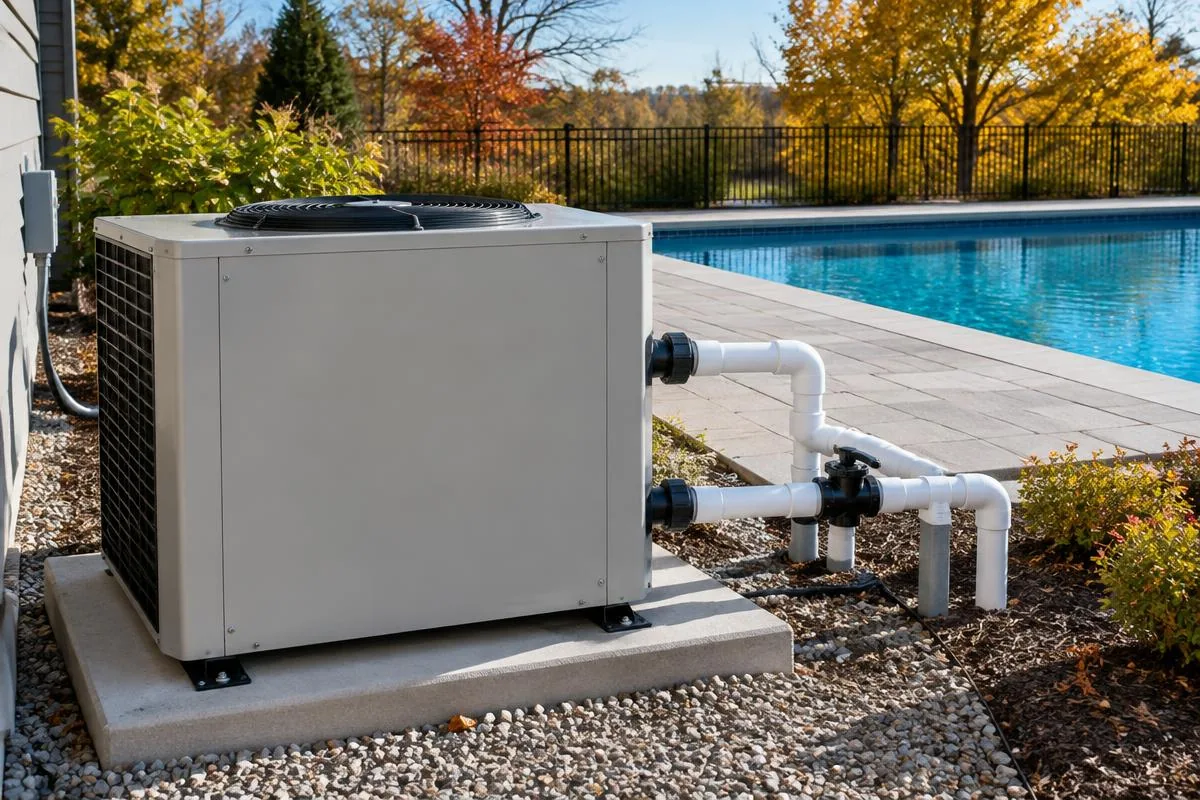
As daytime temperatures taper into the sixties and nights dip into the forties, unheated pools lose thermal energy rapidly through surface evaporation. Traditional natural gas and propane heaters deliver fast heat but burn through operating budgets quickly when running constantly against autumn chill. Inverter pool heat pumps have taken over the shoulder-season market because they extract ambient heat from the air and transfer it into your water at a fraction of the operating cost of fossil-fuel burners.
Transitioning into late-season heating requires realistic performance expectations and precise hardware matching. Heat pumps do not create heat out of thin air; their efficiency drops alongside ambient air temperatures. If you plan to maintain comfortable water in the low-80s through October and November, sizing your unit correctly, meeting stringent electrical panel requirements, and managing water flow with a dedicated plumbing bypass are critical steps.
Understanding BTU Ratings and Fall Temperature Drops
Pool heat pumps are rated by BTUs under optimal testing conditions, typically 80 degrees Fahrenheit ambient air, 80 degrees water, and 80 percent relative humidity (80/80/80). When ambient air drops to 50 degrees Fahrenheit, a standard heat pump can lose between 30 and 50 percent of its rated heating capacity. Sizing based strictly on mid-summer specifications guarantees that the system will fail to keep up once overnight frost arrives.
To combat this fall drop-off, size up to a unit rated for significantly more gallonage than your pool holds. For example, a 15,000-gallon pool that requires 80,000 BTUs in July often demands a 110,000 to 140,000 BTU unit to sustain 82-degree water when October night temperatures sit around 45 degrees. Undersizing leads to continuous compressor cycling, premature hardware wear, and water that never reaches comfortable swimming temperatures.
- AHRI ratings reflect ideal conditions; always evaluate the low-ambient 50/80/63 performance chart.
- Multiply surface area by 10 to calculate baseline surface heat loss in windy, exposed conditions.
- Target units producing at least 110,000 BTUs for standard 15,000 to 20,000 gallon in-ground pools in northern zones.
Inverter Compressors Versus Single-Speed Units
Older heat pumps rely on single-speed scroll compressors that operate at 100 percent output or shut off entirely. Inverter-driven heat pumps use variable-speed compressors and brushless fans that modulate output between 20 and 100 percent based on water demand. During moderate daytime hours, an inverter unit throttles down to maintain water temperature at a coefficient of performance (COP) exceeding 7.0, consuming minimal electricity.
Single-speed units suffer from harsh inrush currents every time the contactor closes, which causes mechanical stress and creates noticeable electrical line sag. Inverter models feature soft-start electronics that eliminate high startup spikes, making them friendlier to residential electrical services and compatible with standby generators. While inverter models carry a 20 to 35 percent upfront price premium over single-speed units, their reduced seasonal energy draw and quieter decibel ratings justify the investment.
Electrical Service and Dedicated Circuit Specifications
A pool heat pump is a heavy continuous electrical load that demands dedicated subpanel breaker capacity. Most residential units running between 110,000 and 140,000 BTUs require a dedicated 230-volt single-phase circuit on a 50-amp or 60-amp dual-pole breaker. You must verify that your main electrical service has enough available ampacity before purchasing equipment, as adding a 50-amp load to an already maxed 100-amp or 150-amp home service panel will require an expensive panel upgrade.
Wiring runs require outdoor-rated copper conductors sized according to the unit's minimum circuit ampacity (MCA) and maximum overcurrent protection (MOCP) plate rating. For runs exceeding 60 feet from the subpanel to the equipment pad, upsize the wire gauge from 6 AWG to 4 AWG to prevent voltage drop under peak draw. A local exterior disconnect switch must be installed within line of sight of the heat pump to comply with National Electrical Code requirements.
- Check the data plate for Minimum Circuit Ampacity (MCA) and Maximum Overcurrent Protection (MOCP).
- Install a water-resistant, lockable disconnect box within 50 feet and sight of the equipment.
- Bond the heat pump chassis to your existing pool bonding ring with solid 8 AWG bare copper wire.
Plumbing Layout, Water Flow, and Pad Clearances
Heat pumps require a precise flow rate, generally between 30 and 70 gallons per minute, to transfer heat efficiently across the titanium heat exchanger without generating excessive backpressure. Always plumb the heat pump downstream from your filter and upstream from any chemical feeders or salt chlorine generator cells. Installing a chemical feeder before the heat pump sends concentrated sanitizers directly into the titanium core, voiding manufacturer warranties and accelerating corrosion.
A three-valve bypass manifold using schedule 40 PVC and high-temp CPVC unions is mandatory for proper maintenance and seasonal isolation. This layout allows you to throttle water flow through the heat pump using a variable-speed circulation pump, or bypass the unit entirely during winterization or heavy acid washing. Clearances are equally important: heat pumps pull massive air volume across their evaporator coils, requiring at least 24 inches of clearance around the perimeter and 4 to 6 feet of unobstructed overhead clearance.
Thermal Retention: Why Solar Covers Are Non-Negotiable
Running a heat pump in cooler autumn air without a thermal barrier is like running an indoor furnace with all your windows open. Evaporation accounts for roughly 75 percent of total swimming pool heat loss, and that loss accelerates when dry, cool fall winds sweep across the water surface. A standard 12-mil or 16-mil polyethylene solar blanket prevents up to 95 percent of evaporative heat loss overnight, locking in the degrees generated by your heat pump.
Without a cover, a pool heated to 82 degrees in 50-degree ambient air can easily shed 6 to 10 degrees of heat between dusk and dawn. This forces your heat pump to spend six to eight hours each morning simply recovering lost ground rather than elevating water temperature. Installing a heavy-duty commercial roller reel at the deep end ensures removing and deploying the blanket remains a one-person, two-minute task.
- Deploy the cover immediately after swimming to trap thermal energy before nightfall.
- Select a clear or diamond-pattern 12-mil cover to balance UV heat absorption with physical durability.
- Trim the cover flush with your pool coping line to minimize perimeter wind lift and heat escape.
Shop the parts mentioned
Ready to shop this category?
Thousands of products in stock — pay over time with Shop Pay on items over $50.
Shop equipment